“The meeting followed a request by the union for police protection to enable it resume unrestricted operations in motor parks across Oyo State.”
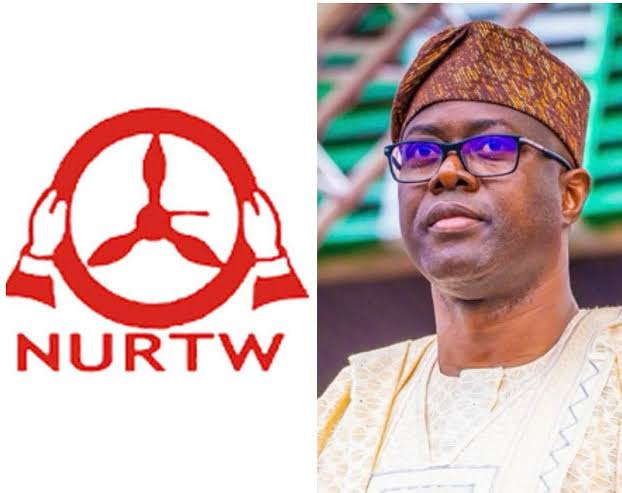
The National Union of Road Transport Workers (NURTW), Oyo State Branch, has accused the Oyo State Attorney-General and Commissioner for Justice of deliberately misrepresenting a subsisting Court of Appeal judgment, insisting that the ruling restored the union’s right to resume operations in motor parks and garages across the state.

In a letter dated June 26, 2026, addressed to the Attorney-General and signed by Chukwuma H. Onwuemene of Falana & Falana’s Chambers, the union alleged that the state’s Chief Law Officer had distorted the meaning of the appellate court’s decision during a recent multi-stakeholder meeting convened by the Oyo State Commissioner of Police.
The meeting followed a request by the union for police protection to enable it resume unrestricted operations in motor parks across Oyo State.
According to the union, the Attorney-General argued at the meeting that the Court of Appeal judgment did not empower the NURTW to resume operations or restore it to its former position in the state’s motor parks.
Rejecting that position, the union described it as a deliberate misrepresentation of a binding court judgment.
“We write with the utmost professional candour but also with deep concern at the manifest distortion of unambiguous judicial pronouncements by a Chief Law Officer of the State, whose sworn duty it is to uphold the rule of law,” the letter stated.
It added, “We are constrained to respond to this position with the forcefulness it demands, for it is not merely erroneous—it is a calculated misrepresentation of the plain and unambiguous language of a binding superior court judgment.”
The union recalled that it had instituted an action before the National Industrial Court challenging the proscription of its activities in Oyo State and seeking declarations that the ban was unconstitutional, as well as orders restoring it to all roads, motor parks and operational units previously occupied by its members.
Although the National Industrial Court dismissed the suit, the union appealed the judgment.
According to the solicitors, the Court of Appeal, in a judgment delivered on September 26, 2025, allowed the appeal, held that the Oyo State Government failed to justify the suspension of the union’s activities, set aside the suspension and nullified the judgment of the lower court.
The letter argued that the appellate court’s decision effectively restored the union’s operational rights.
“We invite the Honourable Attorney General to identify, with the precision expected of a Law Officer, which part of this Order is ambiguous,” the solicitors wrote.
“Order 1 makes a definitive finding that the Respondents—including the Governor of Oyo State and the Attorney General himself—failed to justify the suspension of our Client’s activities. Order 2 allows the appeal and sets aside the suspension on the operations of the Appellant. Order 3 sets aside the judgment of the Lower Court… Order 4 enters final judgment accordingly.”
The union further maintained that no additional court order was required before it could resume operations.
“The reversal of the lower court’s dismissal carries with it the legal force of the reliefs originally claimed. The Court of Appeal’s Order 2, which ‘set aside the suspension on the operations of the Appellant in Oyo State’, is a direct restoration of our Client to its operational status. No further enabling order is required,” the letter stated.
It also argued that the Attorney-General’s interpretation would render the appeal meaningless.
“The position canvassed by your office would produce the absurd result that a litigant who successfully appeals against the dismissal of its case is nonetheless left in the same adverse position as if the appeal had never succeeded. Such a construction is repugnant to both logic and law.”
Citing Section 287(2) of the 1999 Constitution, the union said every authority in Nigeria was under a constitutional obligation to enforce decisions of the Court of Appeal.
“This provision is unqualified and categorical. It admits of no exception for the personal opinions of the Attorney General, the preferences of ‘park managers,’ or the administrative convenience of the Oyo State Government,” the letter stated.
It warned that any continued obstruction of its operations would amount to “a deliberate and continuing contempt of court,” as well as violations of its constitutional rights to freedom of association and movement.
The union consequently demanded that the Attorney-General immediately withdraw what it described as his misleading interpretation of the judgment, advise the Oyo State Government and all persons acting as park managers to vacate the motor parks, and publicly affirm the binding nature of the Court of Appeal’s decision.
It also called on the Commissioner of Police to provide immediate security for NURTW members resuming operations, direct Area Commanders and Divisional Police Officers to enforce the judgment, and arrest anyone who obstructs the union’s activities.
The letter warned that failure to comply with the judgment would leave the union with no option but to institute contempt proceedings against relevant state officials.
“Any further delay, obstruction, or refusal to comply with the aforesaid orders will leave us with no option but to immediately institute proceedings for contempt of court against all relevant State officials personally,” the union said.
It added that it would also seek “an Order of Mandamus compelling compliance with the judgment, damages for the continuing denial of our Client’s constitutional and legal rights, and such further orders as the Court may deem fit in the circumstances.”
“These are not threats lightly made. They are the inevitable legal consequences of choosing to frustrate the lawful authority of a superior court,” the letter concluded.